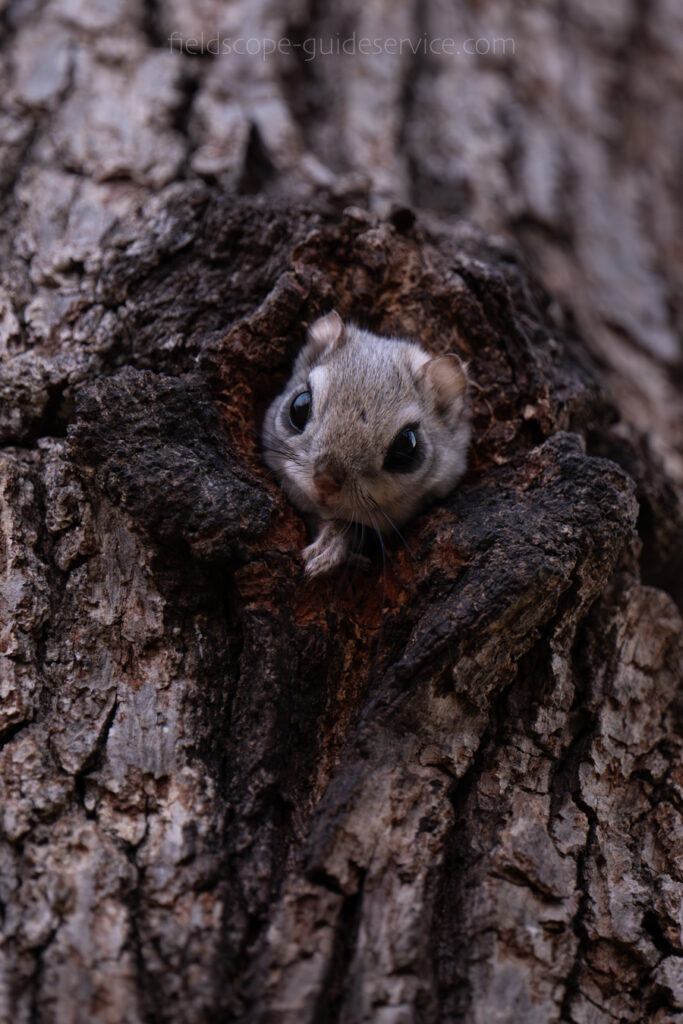
エゾモモンガの観察で一番緊張するのは、巣穴から顔が出てからカラダが全部外に出るまで。
そろそろ出てきそうだなぁという頃に決まってゲストは痺れを切らしてモゾモゾし出すので、余計に緊張感が高まります。だけどそれも慣れ流もの、想定内になってしまえば、それでも出てくれる巣穴に通うようになります。
去年見つけたこの巣穴、今年はあまり見てなかったけど、久しぶりに待ってみると良い時間でした。
The most nerve-wracking moment in observing Hokkaido flying squirrels is the time between when they peek out of the nest hole and when their whole body finally comes out.
Right around the moment when I feel, “They’re about to come out,” the guests always start getting fidgety because their legs fall asleep — which makes the tension rise even more. But once you get used to it and know what to expect, you just keep visiting the nest holes that still produce good activity.
I hadn’t checked this nest hole much this year, even though I found it last winter. But when I waited there again after a long time, it turned out to be a great timing.
巣穴のすぐ下に長い小枝があるのが絶妙で、ここは寝ぼけたモモンガたちの快適な長椅子になっています。
巣穴を見つけた時にいい感じの枝があるなと観察していると、枝の樹皮がわずかに擦られたように跡になっているのに気がつきました。間違いなく毎日モモンガが座ることで出来た痕です。こうした気づきがガイドで活かされてきます。
ただモモンガのいる場所に案内するだけでなく、巣穴から出た後にどういう行動をとるのか、どこへ滑空して何を食べるのか、それを知っているとそれだけ撮影時間が長くなります。
There’s a long, thin branch just below the nest hole, and it works perfectly like a comfortable bench for the half-asleep squirrels.
When I first discovered this nest, I noticed the branch looked “just right,” so I examined it closely—and realized the bark had faint wear marks. Those marks are definitely from the squirrels sitting on it every day. These little discoveries are what I can put to use as a guide.
It’s not just about showing people where the squirrels are.
Knowing what they do after coming out of the nest—where they glide to, what they eat, how they move—makes a huge difference. The more you understand their behavior, the longer and better the photography opportunities become.
予想通り、枝に乗ったモモンガたち。今はまだ3匹ですが、寒くなるとさらに増えるでしょう。
このあと彼らは幹を登り、近くのカシワを経由して20m先の大きなハルニレへ滑空しました。追いかけてみるとハルニレをさらに登り、頂上の枝先を揺らしながら器用に冬芽を食べ始めました。空高くですが、まだまだ撮影ができます。
ガイドとしては更にこの後の行動が気になるので、カメラは置いて双眼鏡で追いかけます。これがハンノキだったら雄花を取って安全な低い枝などに移動してから食べるよなぁと思いながら見続けると、やっぱりハルニレなので同じ場所で食べ続けて暗くなりました。
Just as I expected, the flying squirrels climbed onto the branch. There are only three of them for now, but once it gets colder, that number will likely increase.
After that, they climbed up the trunk, moved through a nearby oak, and then glided about 20 meters to a large elm. When I followed them, they kept climbing higher, and at the very top they began skillfully eating the winter buds, swaying the thin branches as they fed. Even high up in the canopy, you can still photograph them.
But as a guide, I’m always curious about what they do after that, so I put the camera down and follow them with binoculars.
If this were an alder, they would grab a male catkin and move to a safer, lower branch to eat it—so I watched with that in mind. But since it was an elm, they stayed right where they were, kept eating, and eventually the forest grew dark.
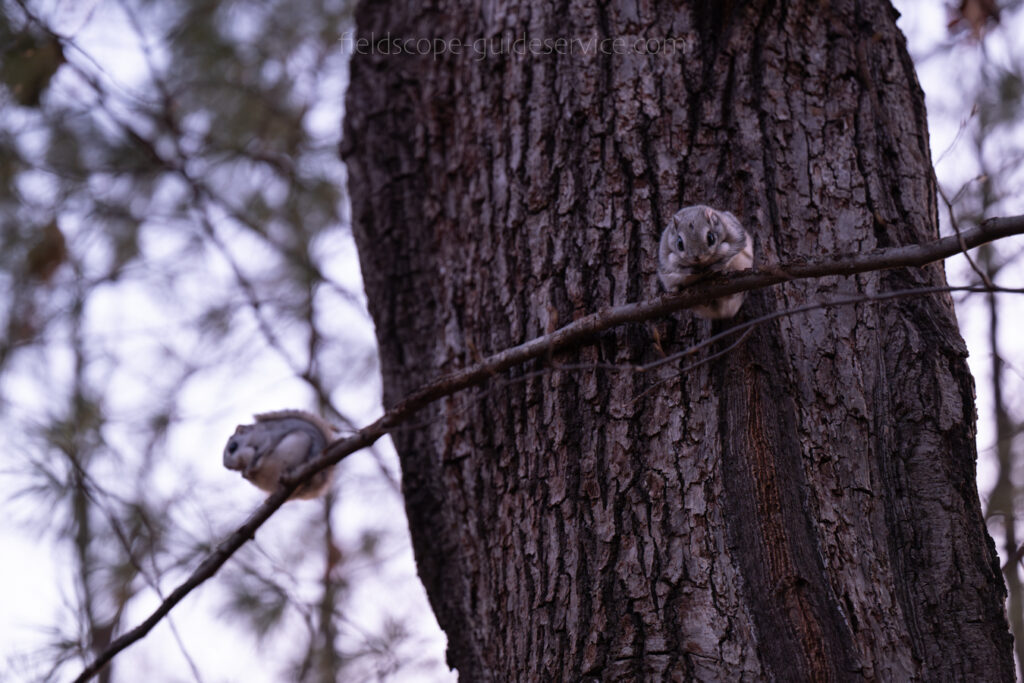
今シーズンは長椅子に何匹のモモンガが座るのか、そして誰がそれを撮るのか、楽しみです。
I’m excited to see how many Hokkaido flying squirrels will sit on that “bench” this season — and who will be the one to capture the moment.