
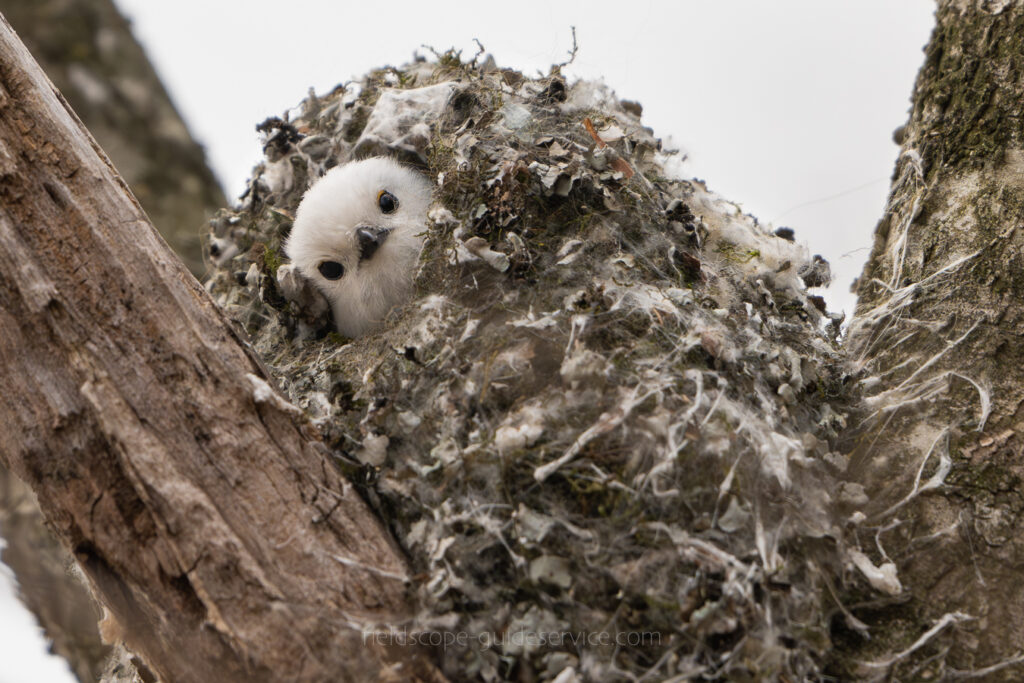
シマエナガは暖かくなり始める2月の下旬から、3月にかけて子育ての為の巣作りを始めます。
ハシブトガラやシジュウカラなど他の小鳥たちと一緒に混群になって飛び、餌をとる姿をよく見かけますが、動きは早く身体も小さいので追いかけるのは大変。樹液のツララと巣作り、この二つは絶好の観察機会です。
一昨年の冬、2月のガイドのピークの真っ只中で、ある日突然シマエナガがペアになり飛んでいることに気が付きました。
もうそんな季節かと思い、双眼鏡で見てみると口に何かを咥えています。よく食べているアブラムシでは無いし、白くて丸くてダンゴムシくらいのサイズでした。シマエナガはそれを咥えたまま、林の奥に飛んでいってしまいました。
追いかけてみると、ヤチダモの15メートルの高さに留まっています。何してるのかな?ともう一度双眼鏡を覗くと、シマエナガは飛んでさっきの方向へ戻っていってしまいました。
今のは何だったんだ・・・?と頭の中に疑問がたくさん湧いてきました。青空と雪、風は冷たいけど太陽がポカポカして春を感じる日でした。
From late February to March, as the air begins to warm, Shima-enaga (Long-tailed Tits) start building nests for their young.
While they are often seen foraging in mixed flocks with Marsh Tits and Great Tits, their tiny bodies and swift movements make them incredibly difficult to track. That is why “sap icicles” and “nest building” provide such precious opportunities for observation.
Two years ago, in the middle of the peak guiding season in February, I suddenly noticed a pair of Shima-enaga flying together.
“Is it that time already?” I wondered. Looking through my binoculars, I saw one of them carrying something in its beak. It wasn’t the aphids they usually eat; it was white, round, and about the size of a pill bug. With the object still in its beak, the bird vanished into the depths of the forest.
I followed and found it perched 15 meters up in a Japanese Ash tree. “What are you doing?” I whispered, peering through my binoculars again—but the bird had already taken flight, heading back the way it came.
“What was that just now…?” Questions filled my mind. Surrounded by blue sky and white snow, the wind was biting, but the sun felt warm on my skin. It was a day that truly felt like the beginning of spring.
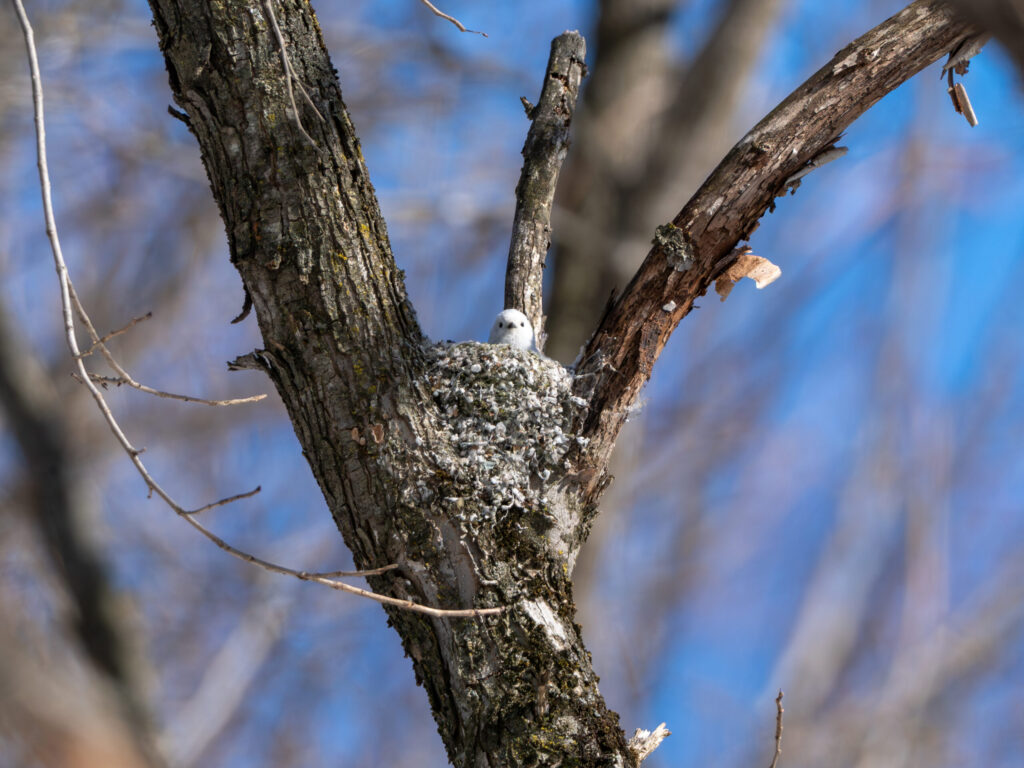
いつもそうですが、きっかけは些細なことです。ちょっとした疑問から自然界のヒントに気がつき、追いかけることで普通は見過ごしてしまうことを発見できます。シマエナガの巣作りは、その後たくさん見かけるようになりました。
観察して、追いかける。ただそれだけです。途中で見失っても大丈夫、彼らは同じようなコースを飛び、同じような場所で巣材を集めます。
早くて3週間ほどで屋根まで出来て、その後ペースを落として内装を仕上げていきます。
巣の進行状況によって、集める巣材が変わり、お皿の時は蜘蛛の糸を接着剤に柔らかい樹皮やコケや地衣類、内装にはイケマやガガイモの綿毛、小鳥や水辺が近ければ白鳥などの水鳥のダウンボールなどをたっぷり詰め込みベッドにします。
It always starts with something small—a tiny question that leads to a hint from nature. By following those clues, you discover things that are usually overlooked. Since that day, I’ve had many more opportunities to observe Shima-enaga building their nests.
Observe and follow. That’s all there is to it. It’s okay if you lose sight of them for a moment; they usually fly the same routes and gather materials in the same spots.
It takes about three weeks for them to complete the roof. After that, they slow their pace and focus on the interior design.
The materials they gather change depending on the stage of the nest. When building the “cup” or base, they use spider silk as an adhesive to bind soft bark, moss, and lichen. For the interior, they gather silky down from plants like Ikema (Cynanchum caudatum) or Milkweed. If they are near water or other birds, they might even collect plenty of down feathers from swans to create a cozy, warm bed.
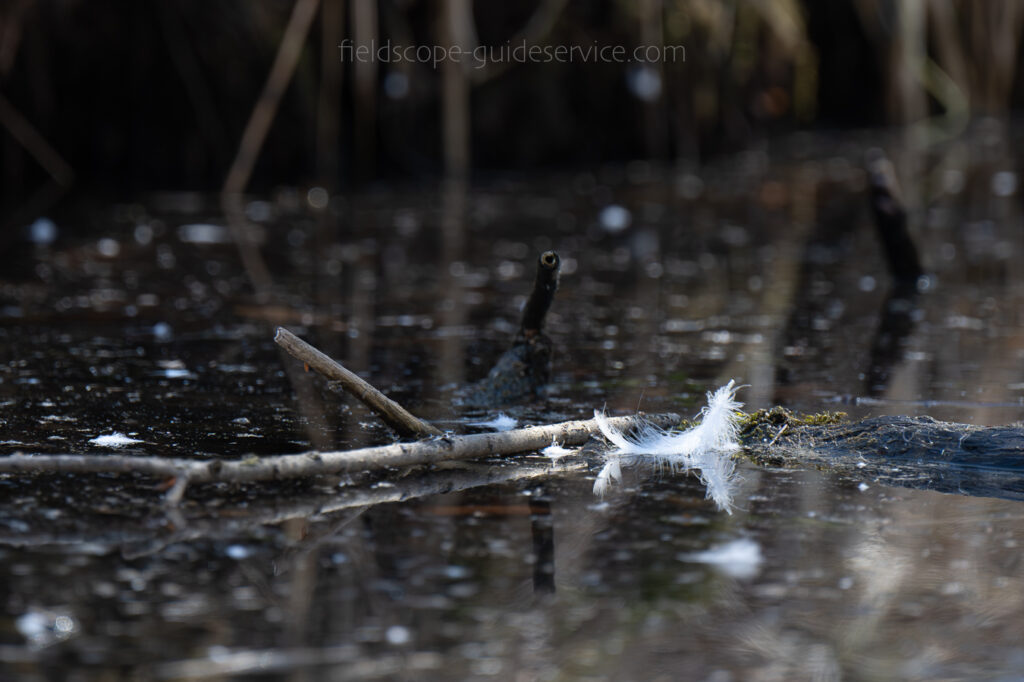
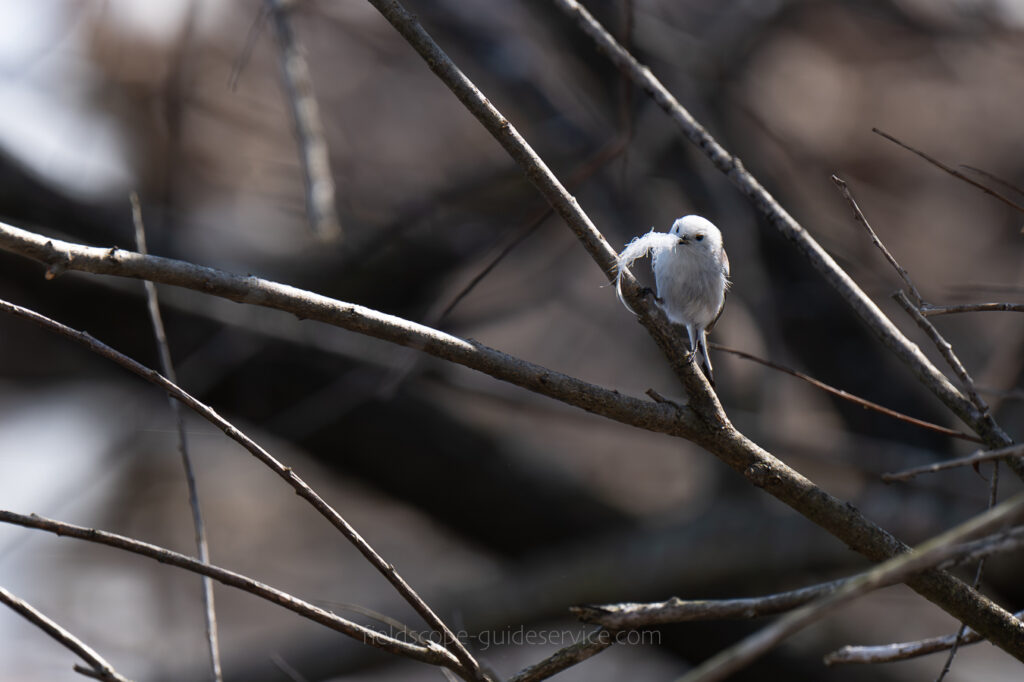
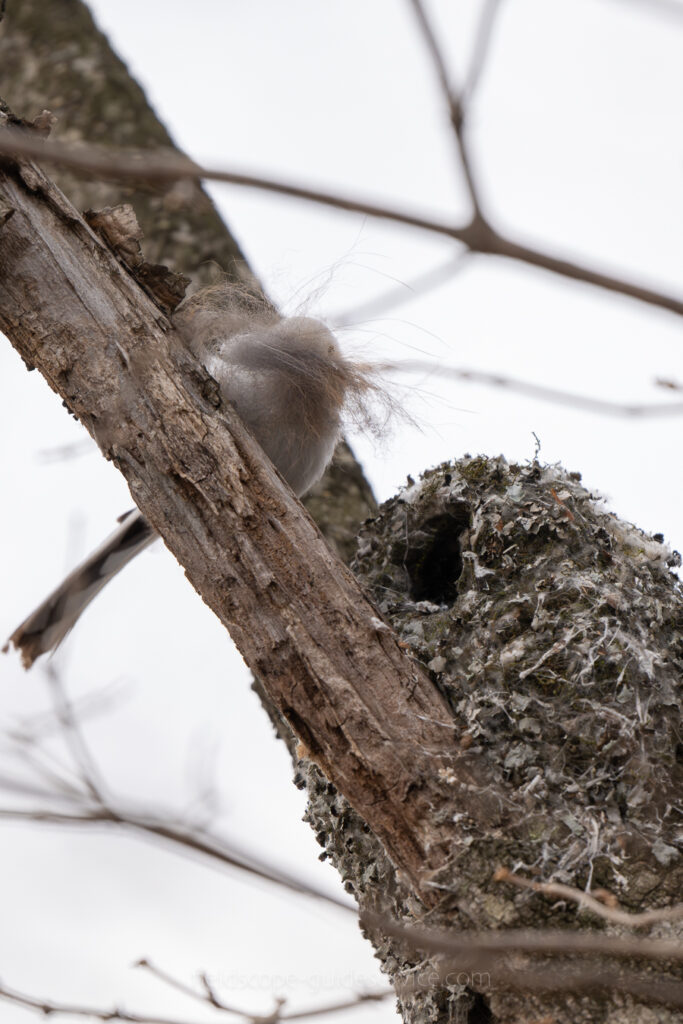
集めている巣材を観察することで、どこに飛ぶのかも分かってくるようになります。
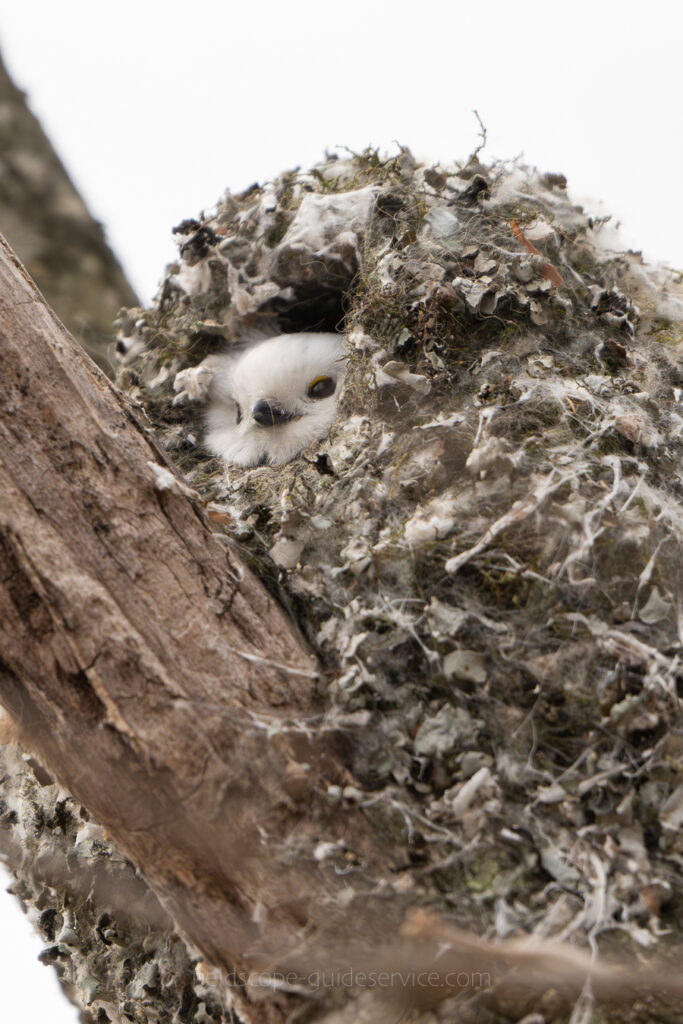
シマエナガの巣はとても柔らかくて、彼らが中に入り作業をしていると巣の全体がモコモコと動き、よく伸び縮みするのが見られます。屋根までできるとピンポン玉くらいの大きさの入り口もついて、卵形の見事な造形美が完成します。
自然が造るものって、すごく優しい形。よく馴染み、飾らなくて、ワンダーです。
By observing the materials they gather, you start to understand exactly where they are heading next.
A Shima-enaga’s nest is incredibly soft. When they are inside working away, you can see the entire nest pulsing and shifting—expanding and contracting as they move. Once the roof is finished, a tiny entrance about the size of a ping-pong ball appears, completing a magnificent, egg-shaped masterpiece.
The things nature creates always have such gentle forms. They blend in perfectly, remain unpretentious, and are filled with wonder.
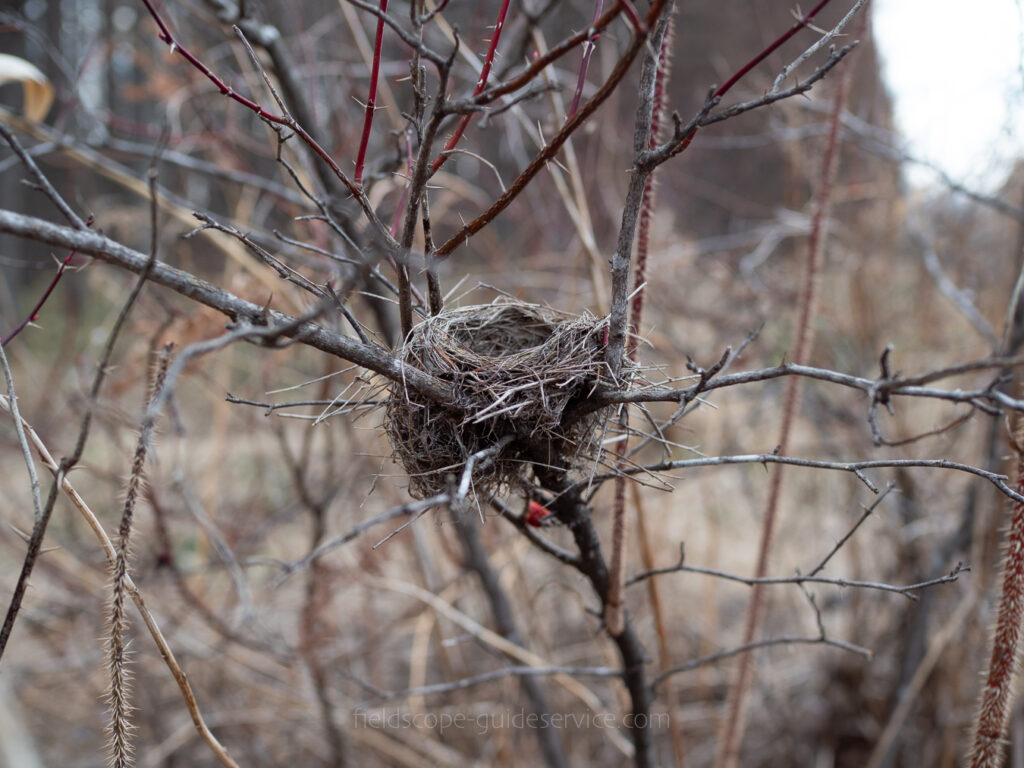
このベニヒワの巣、これも見事ですが・・・やっぱりシマエナガには敵いません。
シマエナガの巣の伸縮性とカモフラージュ性、すごいです。中に入って寝てみたいと思ってしまいますね・・・。
Look at this Redpoll’s nest—it’s also a work of art… but it still can’t compete with the Shima-enaga.
The elasticity and the camouflage of a Shima-enaga’s nest are simply incredible. It looks so cozy that I almost find myself wishing I could curl up and sleep inside one.
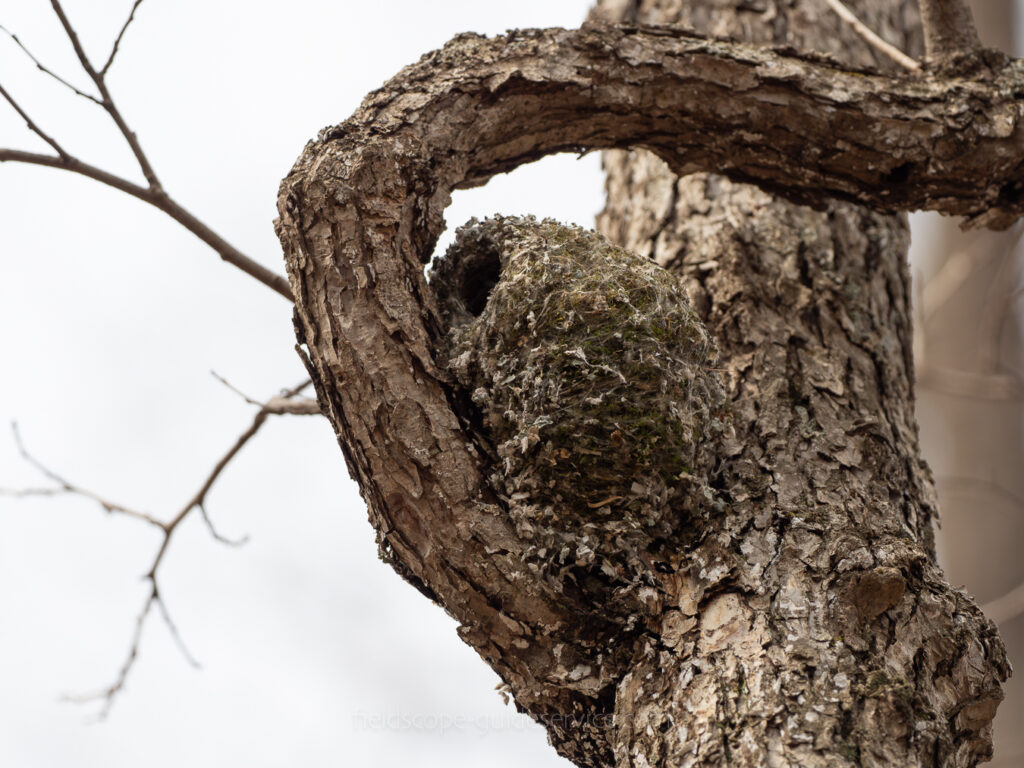
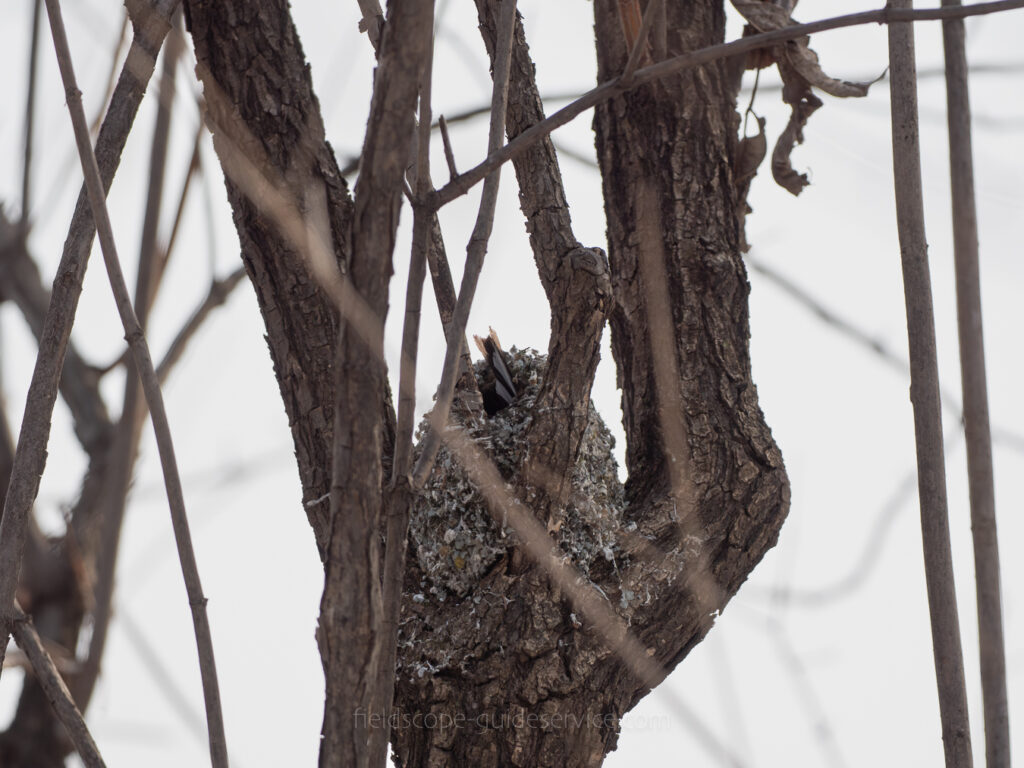
ヒバリが鳴いて、ふきのとうが大きくなり始めた頃、巣作りは終わり、いよいよ抱卵から過酷な子育てが続きます。
5月になると森の木々にも葉っぱが付き、丸見えだった巣が隠されて、カラスやキツネなど天敵から雛たちを守ってくれます。樹液や虫が餌になり、抜け落ちた冬毛はベッドとして再利用され、子育てするべき時期には葉っぱが付いてくれる。生き残る術をちゃんと知ってるのに感嘆します。それらの生態系も、違和感なく調和してピッタリとあるべき姿として収まっていることに感動です。
By the time the skylarks sing and the fukinoto (giant butterbur) buds begin to grow, the nest-building is over. Then begins the long, arduous journey of incubation and raising the chicks.
By May, the forest trees are flush with green leaves. These leaves hide the nests that were once in plain sight, shielding the chicks from predators like crows and foxes. The sap and insects provide food, the shed winter fur of animals is repurposed into bedding, and the leaves arrive exactly when they are needed most for protection.
It is awe-inspiring to see how they instinctively know how to survive. The way these ecosystems align so naturally, fitting together perfectly exactly as they should—it never fails to move me.
昨シーズンは6つの巣を観察していましたが、6月までにすべて襲われて子育ては失敗でした。失敗したペアは子育てが継続している仲間を助けることがあるようです。そのことからも成功率はとても低いことがわかります。
今年こそ、雛たちを見届けることが出来ればいいなぁと願っています。
Last season, I observed six different nests, but unfortunately, all of them were predated by June, and the breeding failed. When a pair loses their own nest, they sometimes help other pairs raise their chicks. This behavior alone shows just how low their success rate truly is.
I truly hope that this year, I will be able to see the chicks safely fledge and leave the nest.
エゾモモンガとエゾユキウサギ、フクロウとシマエナガの3月でした。ゲストの皆様ありがとうございました!
4月はちょっとお休みして、5月からは子ぎつねとイトウ釣り、フライフィッシングとネイチャーガイドのグラデーションです。
5月はまだ少し空きがあります。(6月は完売です)
エゾモモンガはかなり薄暗いですが、年中見ることができます。茶色くなったユキウサギや雪が溶ければナキウサギも観察、撮影出来ますね!子育てがどうなるかは、お楽しみ。
実は最近、川のリサーチにも行き、まだまだ冷たい水だけど元気な鱒に会えました。
近いうちに、釣りについてのブログも書こうと思います。
March was filled with encounters with Ezo Flying Squirrels, Ezo Mountain Hares, Owls, and Shima-enaga. A huge thank you to all the guests who joined me!
I will be taking a short break in April. Starting in May, my focus will shift into a “gradation” of nature guiding and fly fishing—spotting fox kits and chasing the legendary Ito (Japanese Huchen).
There is still some availability in May (June is now fully booked). While it’s usually quite dark when they appear, Ezo Flying Squirrels can be seen year-round. We can also observe and photograph mountain hares as their fur turns brown, and once the snow melts, the Pika (Naki-usagi) will make their appearance too! We’ll have to wait and see how the nesting and rearing of the young go—that’s the exciting part.
Actually, I’ve been out researching the rivers recently. Even though the water is still freezing, I was able to meet some energetic trout. I’ll be writing a blog post about fishing very soon!